Texas Proposition 2 (2025): Understanding the Capital Gains Ban Amendment
Written by Emilie Hamby-Irvine
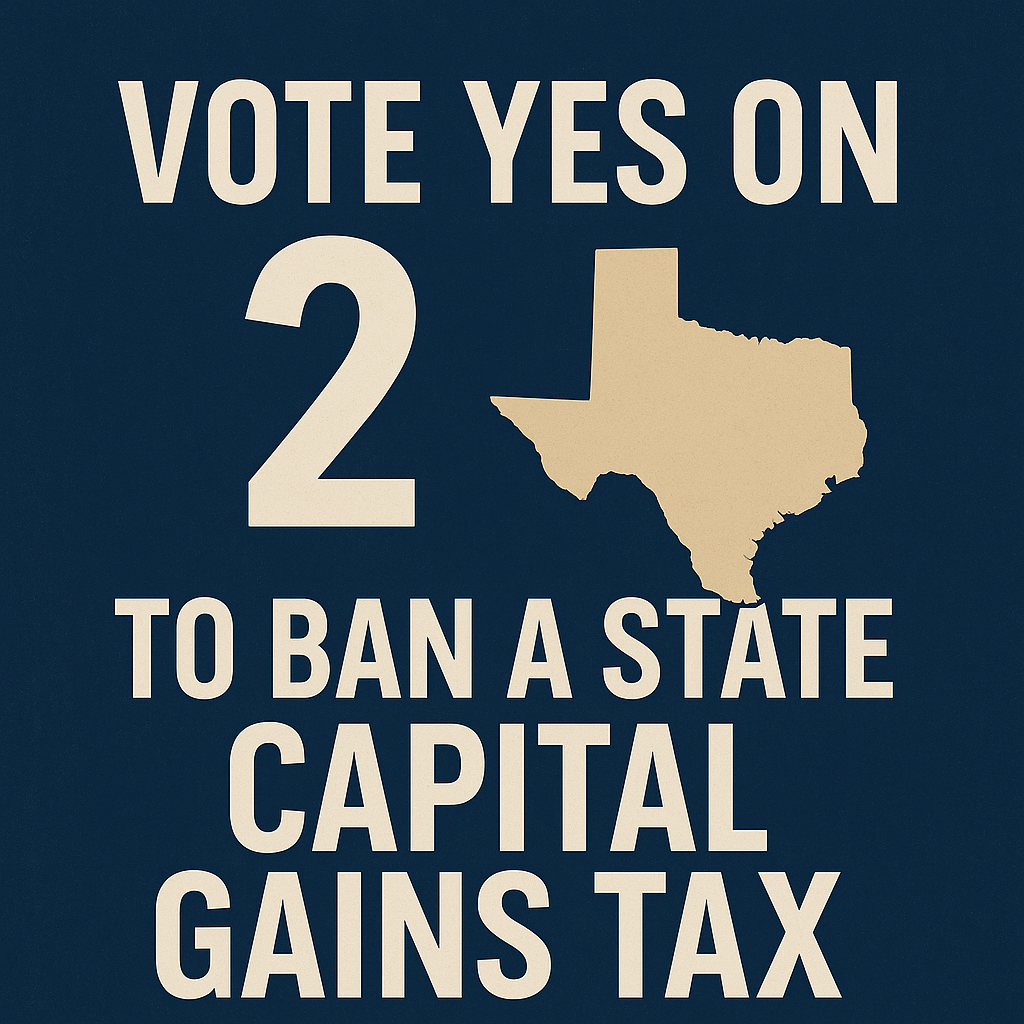
This November, Texans will vote on Proposition 2, a proposed constitutional amendment that could permanently ban the state from imposing a capital gains tax on individuals, families, estates, and trusts.
Important clarification:
Texas currently does not have a state-level capital gains tax—because the state does not impose a personal income tax at all. However, federal capital gains taxes still apply to Texans, just as they do in every state. Proposition 2 wouldn’t affect federal taxes—it’s only about preventing any future state capital gains tax from being enacted.
What Proposition 2 Says
If passed, Proposition 2 would amend the Texas Constitution to prohibit the state from imposing a tax on:
Realized capital gains (profits from the sale of assets like real estate, stocks, or businesses)
Unrealized capital gains (increases in value of assets you still own)
This prohibition would apply to individuals, families, estates, and trusts.
Why It Matters
1. Protecting Texas’s No-State-Income-Tax Advantage
Texas is one of the most attractive states for business owners, investors, and retirees because of its low-tax structure. Proposition 2 would ensure this competitive advantage stays in place.
2. Preventing Future State Tax Expansion
Without this amendment, a future legislature could introduce a state capital gains tax by passing a new law. With Prop 2, that would be unconstitutional—requiring another amendment and a vote by the people.
3. Economic Confidence
Locking in a no-state-capital-gains policy could encourage more investment in Texas real estate, small businesses, and entrepreneurship.
When Would It Take Effect?
Election Day: November 4, 2025
Effective Date (if approved): January 1, 2026
The Fiscal Impact
According to legislative estimates, the change would have a minimal budget impact—roughly $191,689 in administrative costs to put the measure on the ballot and a projected $304,000 biennial revenue shift to maintain school funding levels.
What’s Next?
If you’re a Texas voter, this is your opportunity to decide whether to embed a state capital gains tax ban in the Texas Constitution.
📌 Remember:
Registration deadline for the November 4, 2025 election is October 6, 2025.
Early voting begins October 20, 2025.
Bottom Line: Proposition 2 isn’t about changing today’s tax system—it’s about protecting it for the future. Whether you’re a homeowner, business owner, investor, or simply a taxpayer, this amendment could have long-term implications for Texas’s economic climate.
Categories
Texas 2025 ballot measures, Texas capital gains tax ban, Texas Proposition 2
Tags
VoteTexas, TexasEconomy, CapitalGains, Prop2, TexasVotes